Work/E-Reg Subscale Test
Characterizing an electronic regulator before it ever touches LOX.
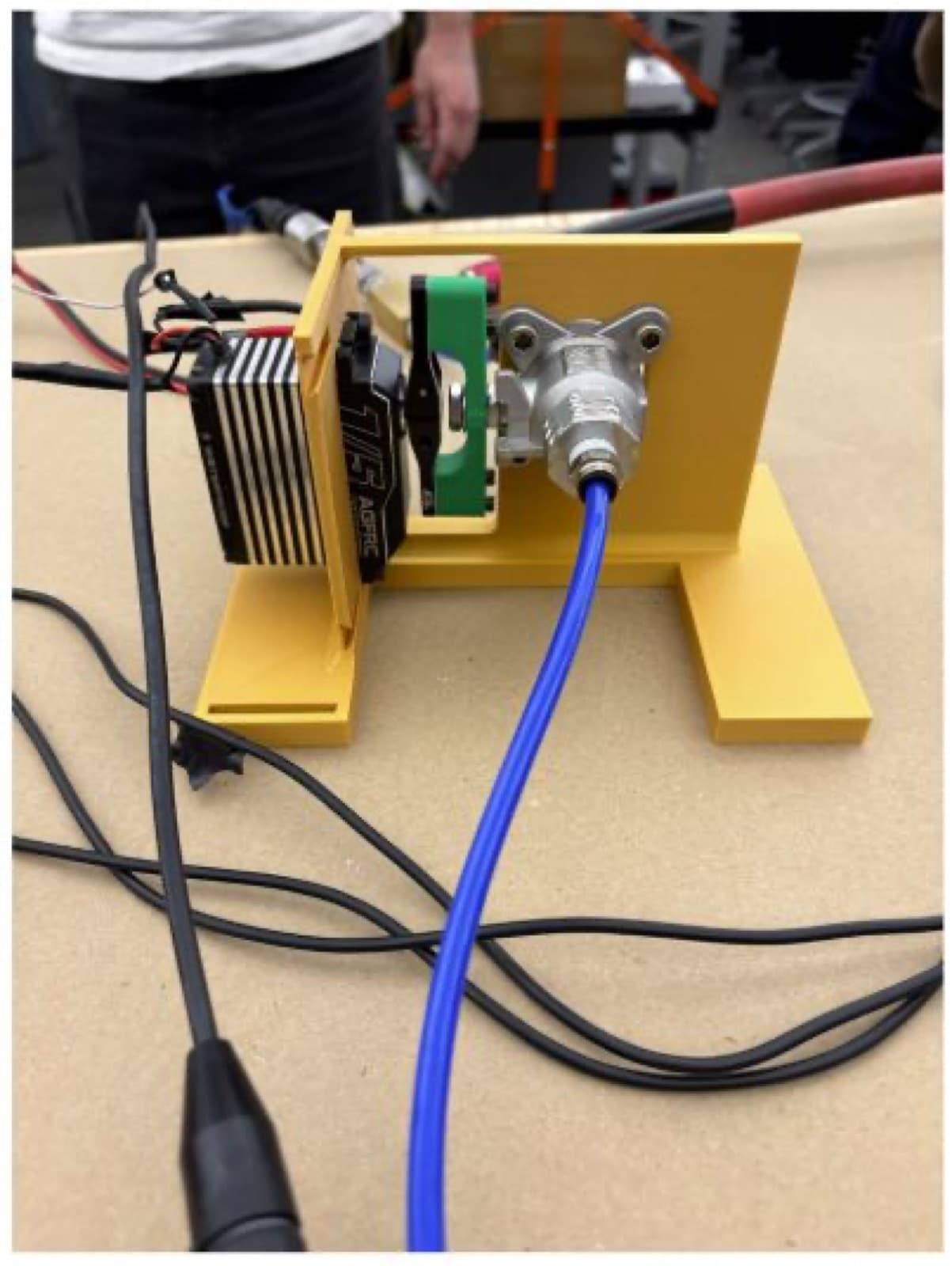
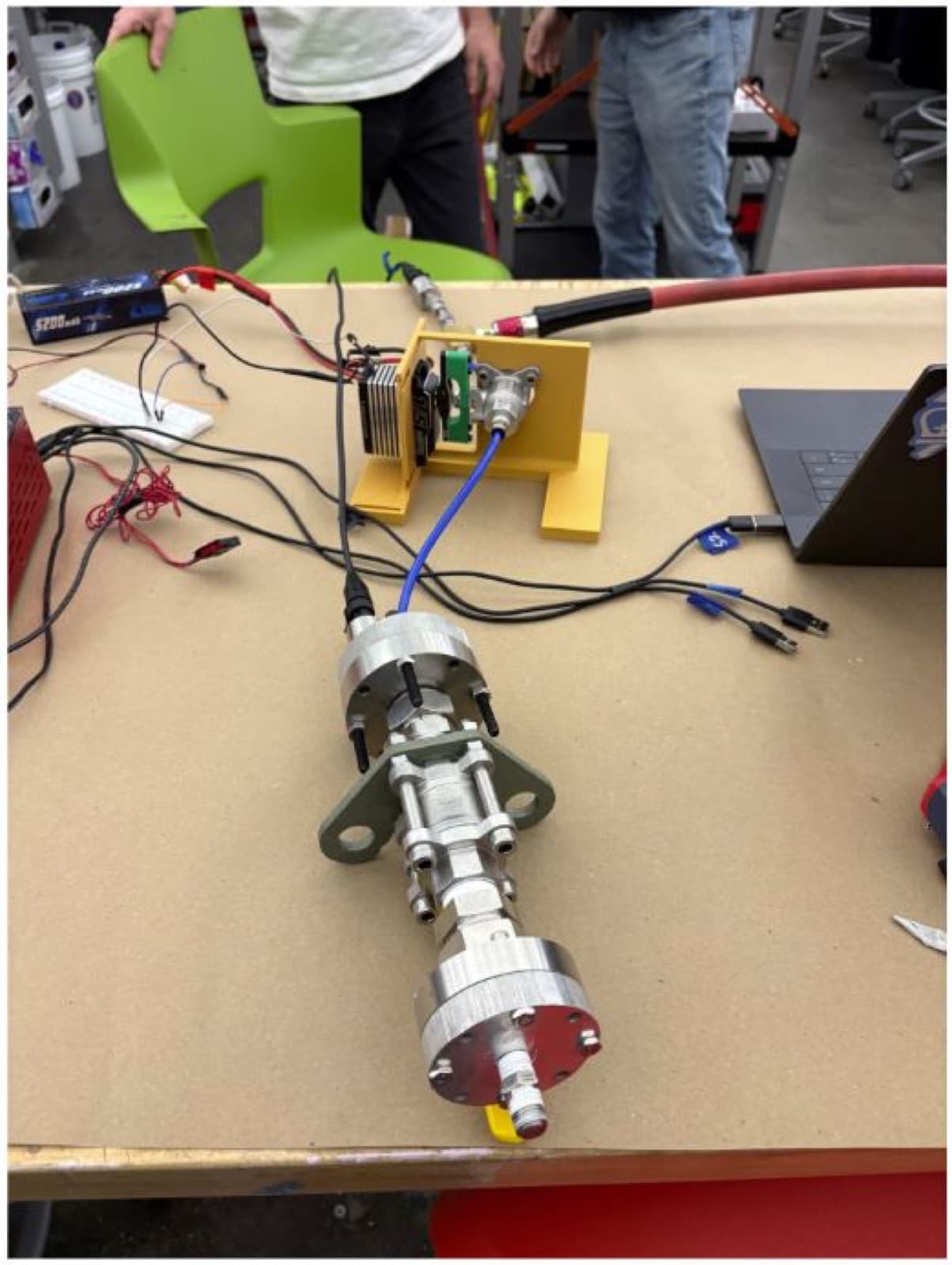
Jake's subscale test for the Columbia Space Initiative electronic regulator: a compressor and 6 gallon tank feed a servo-driven ball valve on a 3D printed stand, with transducers either side and an orifice draining a downstream volume to atmosphere. A PID loop on the downstream transducer turns the valve to hold the setpoint, which is how the team measured the regulator's precision and accuracy at low pressure.
Overview
Objective: run the E-reg at a lower pressure to measure its precision and accuracy under the PID control software, on air, before trusting it with propellant.
Tools
- PID
- pressure transducers
- 3D printing
- P&ID
- When
- 2025
- Where
- Columbia Space Initiative · Propulsion Fluids
- Role
- Propulsion Fluids Member
rig.
Air first, propellant later.
Built the rig from the P&ID: air compressor into a 6 gal tank (rated 200 psi), a pressure transducer, the E-reg, a second transducer, a downstream volume and an orifice at the end.
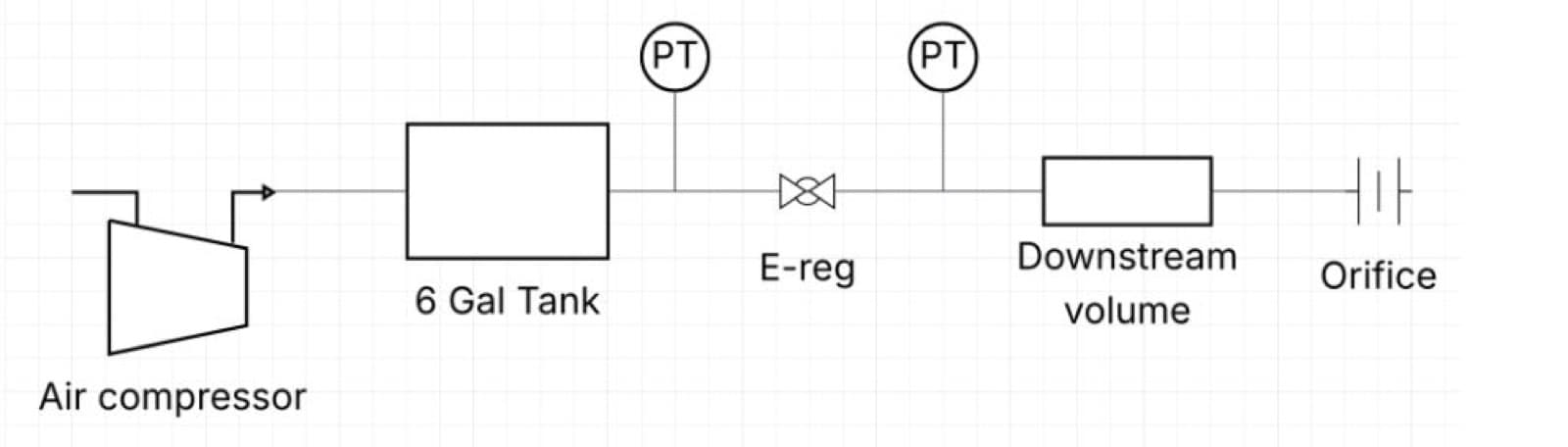
loop.
A constant leak makes the regulator earn its setpoint.
The orifice drains the downstream volume continuously, so the regulator has to keep working to hold its setpoint.
Mounted the actuator on a printed stand coupled to the valve, with the control software closing the loop on the downstream transducer.